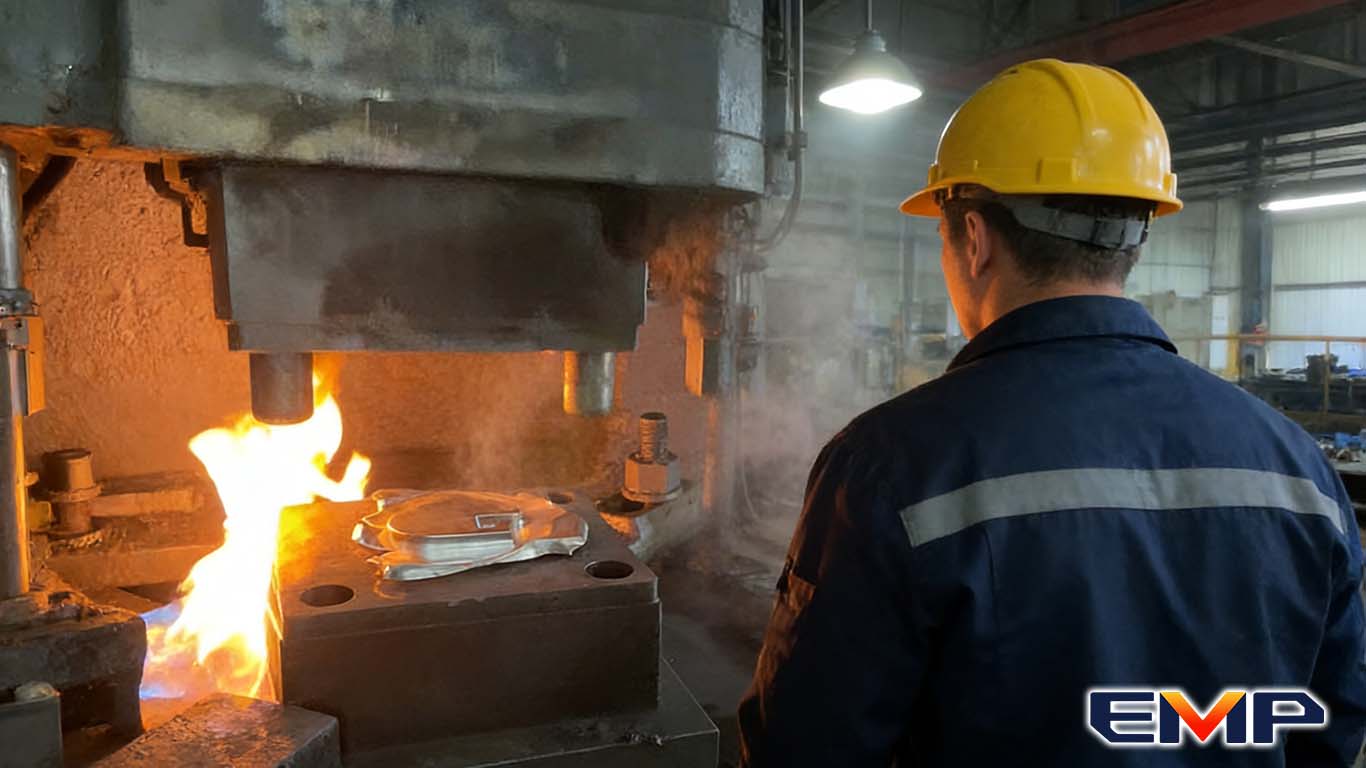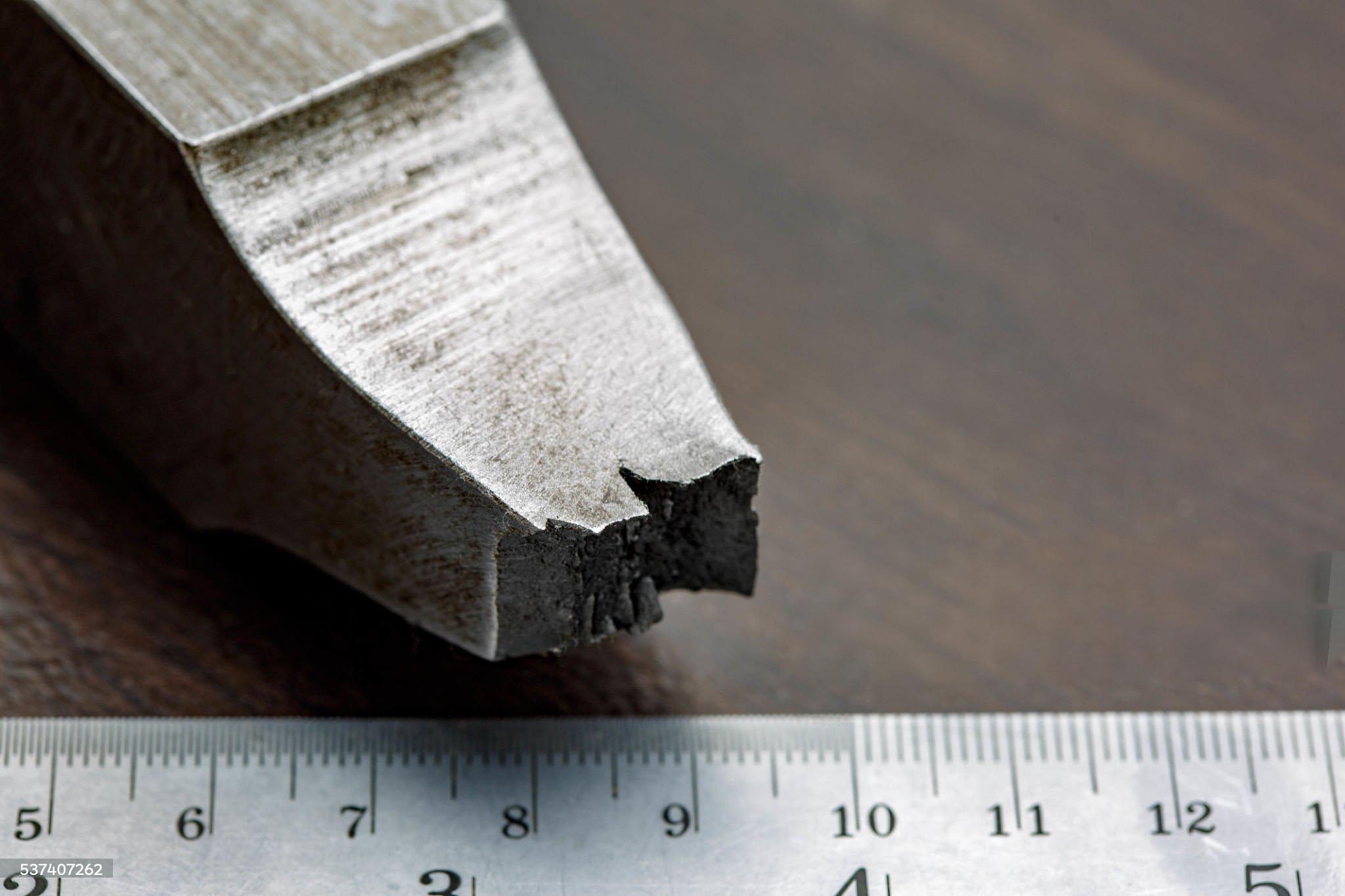
Having established both the metallurgical fundamentals and the critical process parameters that govern aluminum forging, we now arrive at the practical implications of this knowledge. The previous sections have detailed how aluminum should be forged—the temperatures, speeds, and pressures required for success. This final section addresses two equally important questions: How do we ensure consistent quality? and Where is the technology heading?
4. Quality Assurance and Defect Mitigation
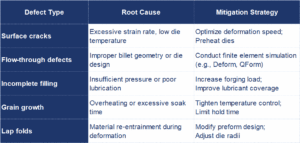
Common forging defects and their preventive measures include:
5. Advanced Techniques and Future Directions
Recent innovations in aluminum forging include:
- Isothermal forging: Dies maintained at billet temperature to eliminate thermal gradients, enabling complex net-shape forming of aerospace components.
- Multi-directional forging: Simultaneous application of forces from multiple axes to achieve uniform refinement in bulk nanostructured materials.
- Semi-solid forging (thixoforging): Forming in the mushy zone to combine cast-like complexity with wrought properties.
- Digital twin integration: Real-time process monitoring and adaptive control using machine learning algorithms to optimize parameter windows.
Sustainability initiatives are also driving adoption of near-net-shape forging, waste minimization, and energy-efficient heating technologies.
6.Conclusion
Aluminum alloy forging is a sophisticated manufacturing discipline that demands integrated control over thermal, mechanical, and tribological parameters. Mastery of forging temperature, strain rate, reduction ratio, and
post-forge thermal processing enables the production of components with superior strength, fatigue resistance, and microstructural uniformity. Qingdao EMP Industry, a leader in advanced aluminum for
ging, has harnessed these precise controls to consistently deliver high-quality forged products that exhibit exceptional mechanical properties, tight dimensional tolerances, and defect-free microstructures. As industry moves toward Industry 4.0 paradigms, the convergence of process simulation, in-situ sensing, and intelligent control will further elevate the precision and reliability of aluminum forgings in critical applications, with EMP at the forefront of this
technological evolution.
Keywords: Aluminum alloy forging, thermomechanical processing, forging parameters, strain rate sensitivity, die design, heat treatment, quality control