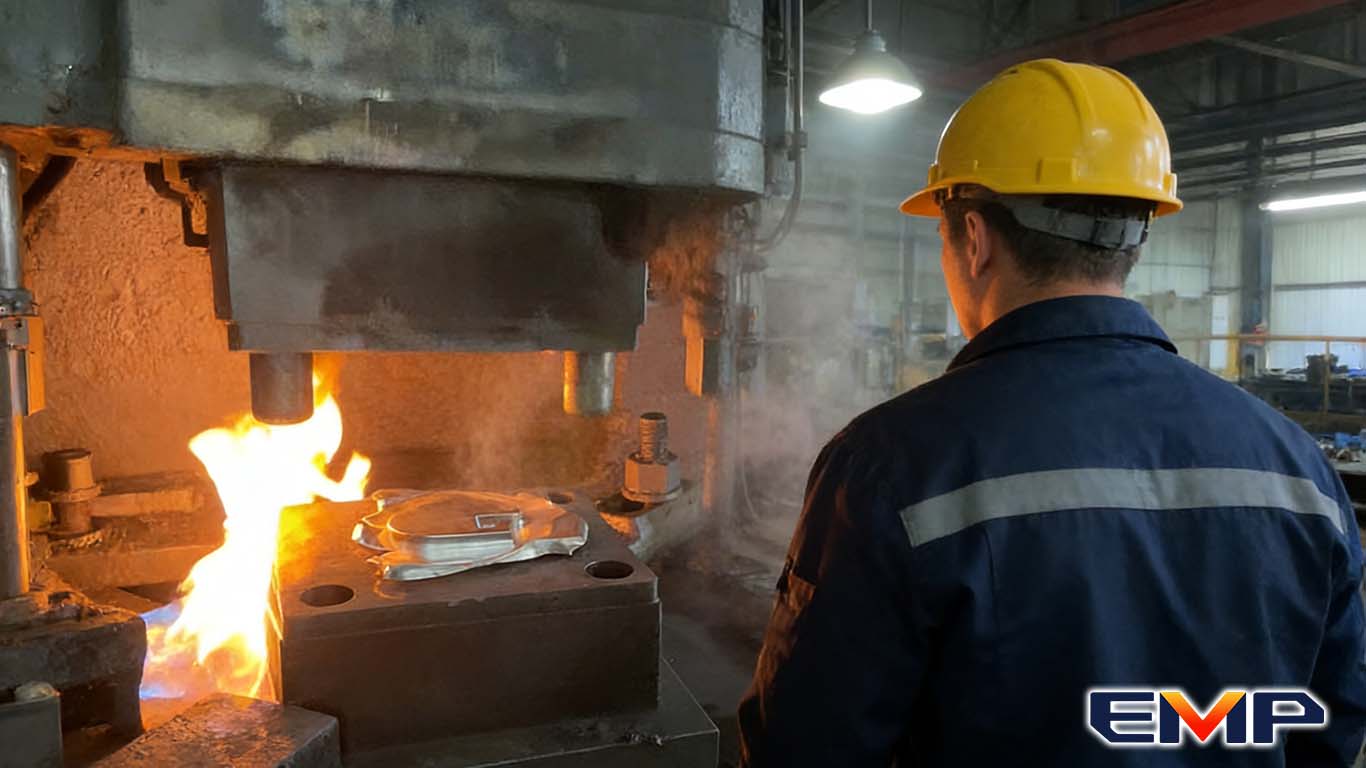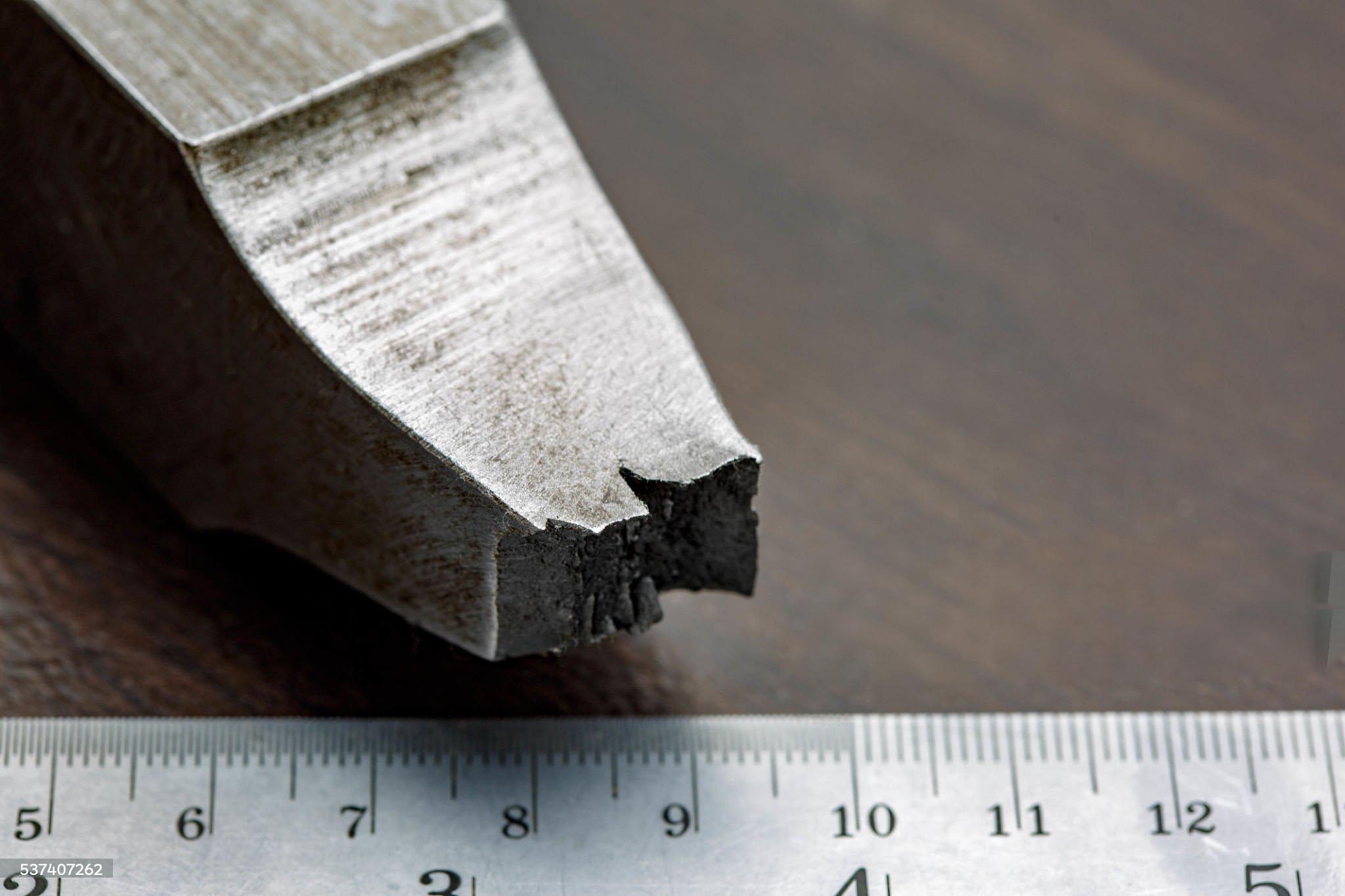
In forging, there is an invisible yet deadly defect—folding.Folding occurs when metal flow is uneven, causing overlapping surfaces or unbonded areas. It commonly appears at corners, parting lines, or places where metal flow is obstructed.
Common Causes of Folding
Folding defects usually originate from issues in process design or operation:
1️⃣ Improper die design — sharp transitions or poor flow paths
2️⃣ Uneven heating or excessive deformation speed, causing inconsistent metal flow
3️⃣ Unclean billet surface — oxide scale or contaminants that resist bonding
How to Prevent Folding
Manufacturers can significantly reduce fold defects by improving process control:
✅ Optimize die radii and metal flow design
– Smooth transitions, proper draft angles, and balanced flow paths
✅ Ensure uniform heating & control deformation speed
– Maintaining optimal temperature prevents flow inconsistencies
✅ Clean billet surface & improve lubrication
– Removing oxide scale ensures metal bonds cleanly
Conclusion:
Reducing folding defects improves both product reliability and production efficiency. Every optimization—from billet preparation to die design—brings forging manufacturers one step closer to process perfection.