In the preceding section, we examined the fundamental classifications of aluminum forging—hot, warm, and cold—and discussed the distinctive metallurgical characteristics that distinguish aluminum from other forgeable materials. The narrow thermal processing window, strain rate sensitivity, and high thermal conductivity of aluminum alloys establish the foundational constraints within which any successful forging operation must operate.
Building upon this foundation, the present section turns to the critical process parameters that directly govern microstructural evolution and final component performance:
3. Critical Process Parameters
3.1 Forging Temperature
Temperature selection is governed by alloy composition and phase diagram characteristics. For example:

6xxx series (Al-Mg-Si): 480–520°C
2xxx series (Al-Cu): 420–470°C
7xxx series (Al-Zn-Mg): 380–440°C
Accurate temperature control ensures complete re-crystallization, optimal precipitate distribution, and minimal deformation resistance. Induction heating with multi-zone control is commonly employed to achieve uniform billet temperature.
3.2 Strain Rate and Deformation Speed
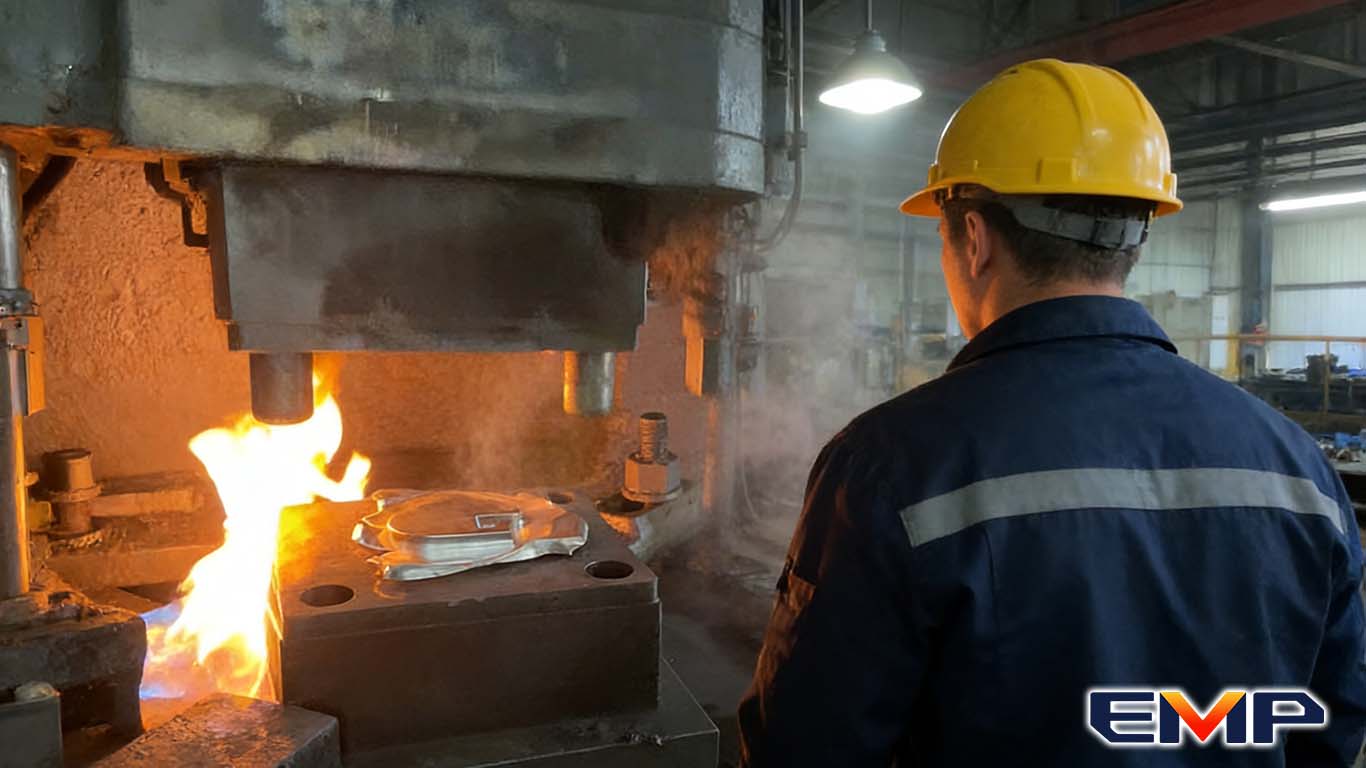
Aluminum alloys exhibit dynamic recovery during hot deformation, but excessive strain rates can trigger flow localization or hot shortness. Hydraulic presses, offering adjustable ram speeds (typically 5–50 mm/s), are preferred over hammers for rate-sensitive alloys. For complex geometries, multi-stage forging with intermediate reheating is often implemented.
3.3 Forging Reduction Ratio
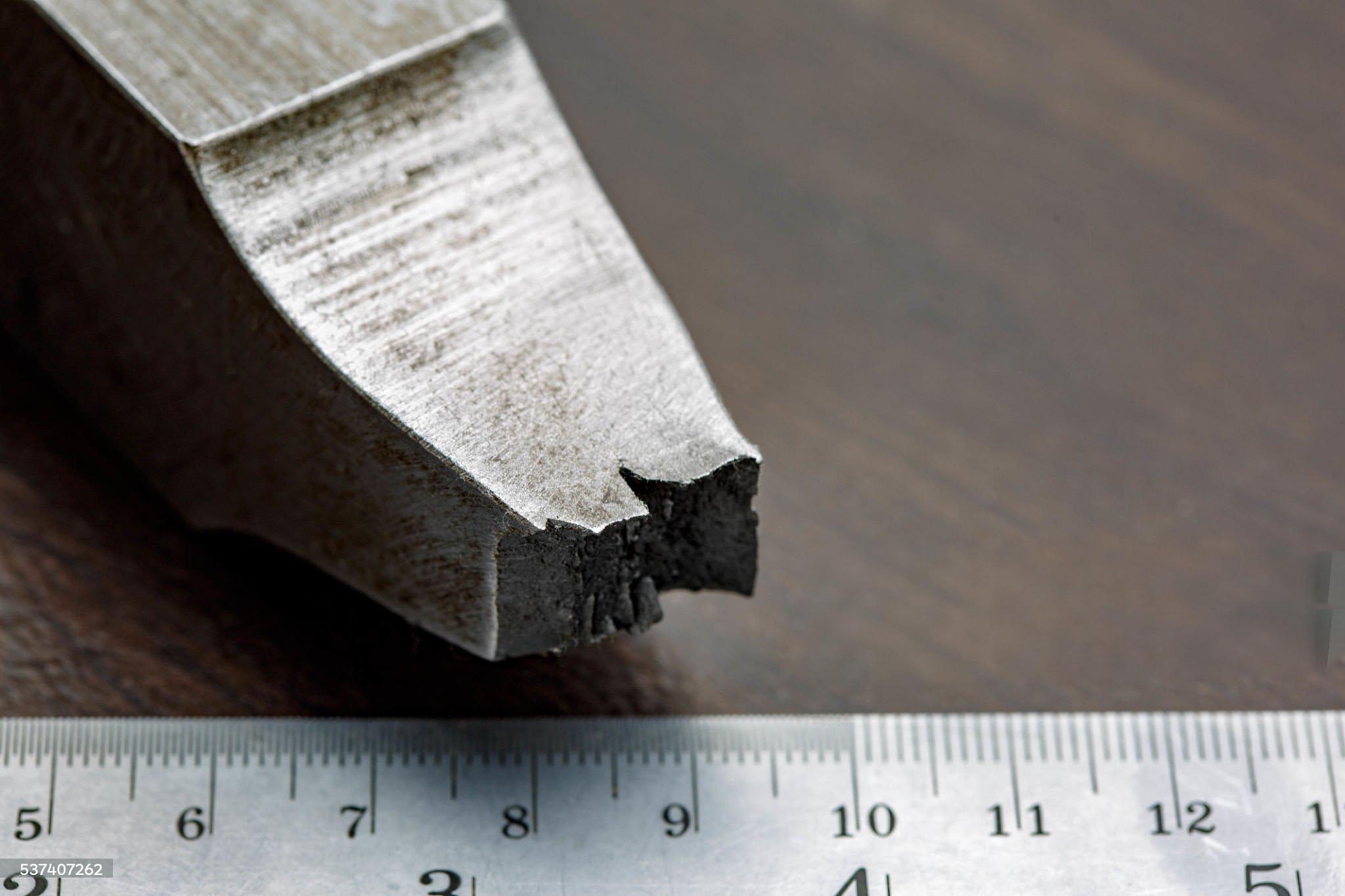
The reduction ratio, defined as the ratio of initial to final cross-sectional area, directly influences grain refinement and mechanical anisotropy. A ratio of 3:1 to 10:1 is typical, with higher ratios promoting dynamic recrystallization and isotropic properties. However, excessive reduction may induce laminar defects or surface tearing, particularly in high-strength alloys.
3.4 Forging Load and Pressure
Required forging pressure depends on:
Material flow stress at forging temperature
Geometry complexity and frictional conditions
Die configuration (open vs. closed die)
Typical specific pressures range from 30 to 150 MPa. Insufficient pressure results in incomplete die filling, while excessive pressure accelerates die wear and may cause clad-induced cracking.
3.5 Die Design and Tribology
Die geometry must incorporate:
Adequate draft angles (1–5°) for part ejection
Generous fillet radii to prevent stress concentration and promote laminar flow
Flash land geometry in closed-die forging to regulate pressure buildup
Lubrication systems must ensure uniform coverage and thermal stability throughout the forging cycle.
3.6 Post-Forging Thermal TreatmentControlled cooling and subsequent heat treatment are integral to achieving target mechanical properties:
Solution heat treatment followed by quenching (water or polymer) retains solute in supersaturated solid solution.
Artificial aging (T5, T6, T7 tempers) precipitates coherent strengthening phases.
Stress relief annealing may be applied to complex geometries to minimize distortion.
Mastering the individual process parameters is essential, but even the most precise settings cannot guarantee success without robust quality assurance and defect prevention strategies. In Part 3, we will explore common forging defects—cracks, laps, incomplete filling—and the metallurgical root causes behind them. We’ll also examine advanced techniques like isothermal forging, digital twin integration, and sustainable practices that are shaping the future of aluminum forging. The final installment reveals how EMP’s technology aligns with these innovations to deliver uncompromising quality. Don’t miss it!