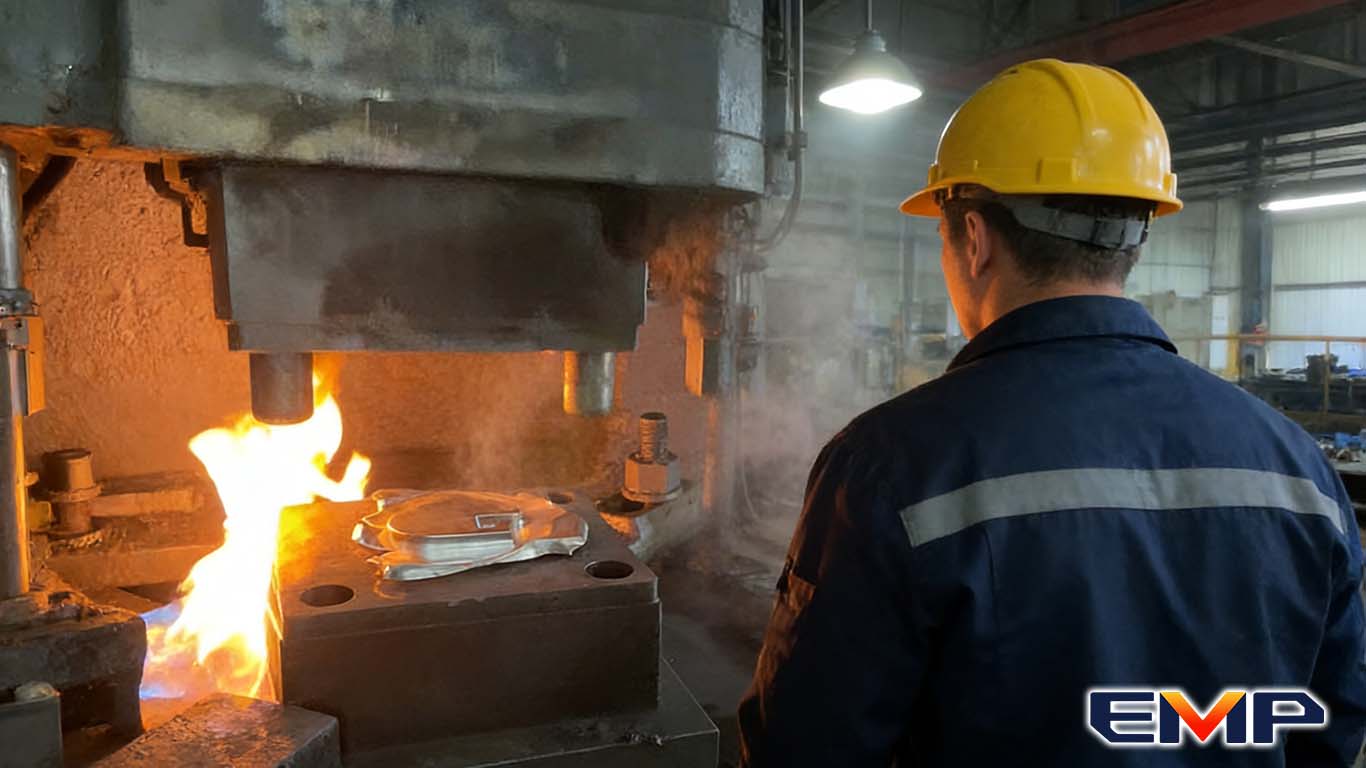
Aluminum alloys, renowned for their exceptional specific strength, corrosion resistance, and formability, are extensively utilized in aerospace, automotive, and precision engineering sectors. Forging, as a critical plastic deformation process, significantly refines the microstructure and enhances the mechanical performance of aluminum components. This article systematically examines the fundamental aspects of aluminum alloy forging technology, encompassing process classifications, metallurgical requirements, and critical control parameters essential for achieving high-integrity forgings.
1. Introduction to Aluminum Alloy Forging
Forging is a thermomechanical processing technique that applies compressive forces to induce controlled plastic deformation in metallic materials. For aluminum alloys, forging is predominantly conducted at elevated temperatures to exploit their enhanced ductility and reduced flow stress. Based on deformation temperature, the process is categorized into:
- Hot forging (350–520°C): Utilized for most aluminum alloys to achieve substantial deformation and microstructural refinement.
- Warm forging (200–350°C): Employed for high-strength alloys requiring precise control over phase transformations and grain morphology.
- Cold forging (ambient temperature): Applied for near-net-shape forming of small components, offering superior surface finish and dimensional tolerance.
Primary forging methodologies include open-die forging, closed-die forging, ring rolling, and precision forging, each selected based on component geometry, production volume, and performance specifications.
2.Metallurgical Characteristics and Process Sensitivities
Aluminum alloys exhibit distinct behavioral characteristics during forging that necessitate stringent process control:
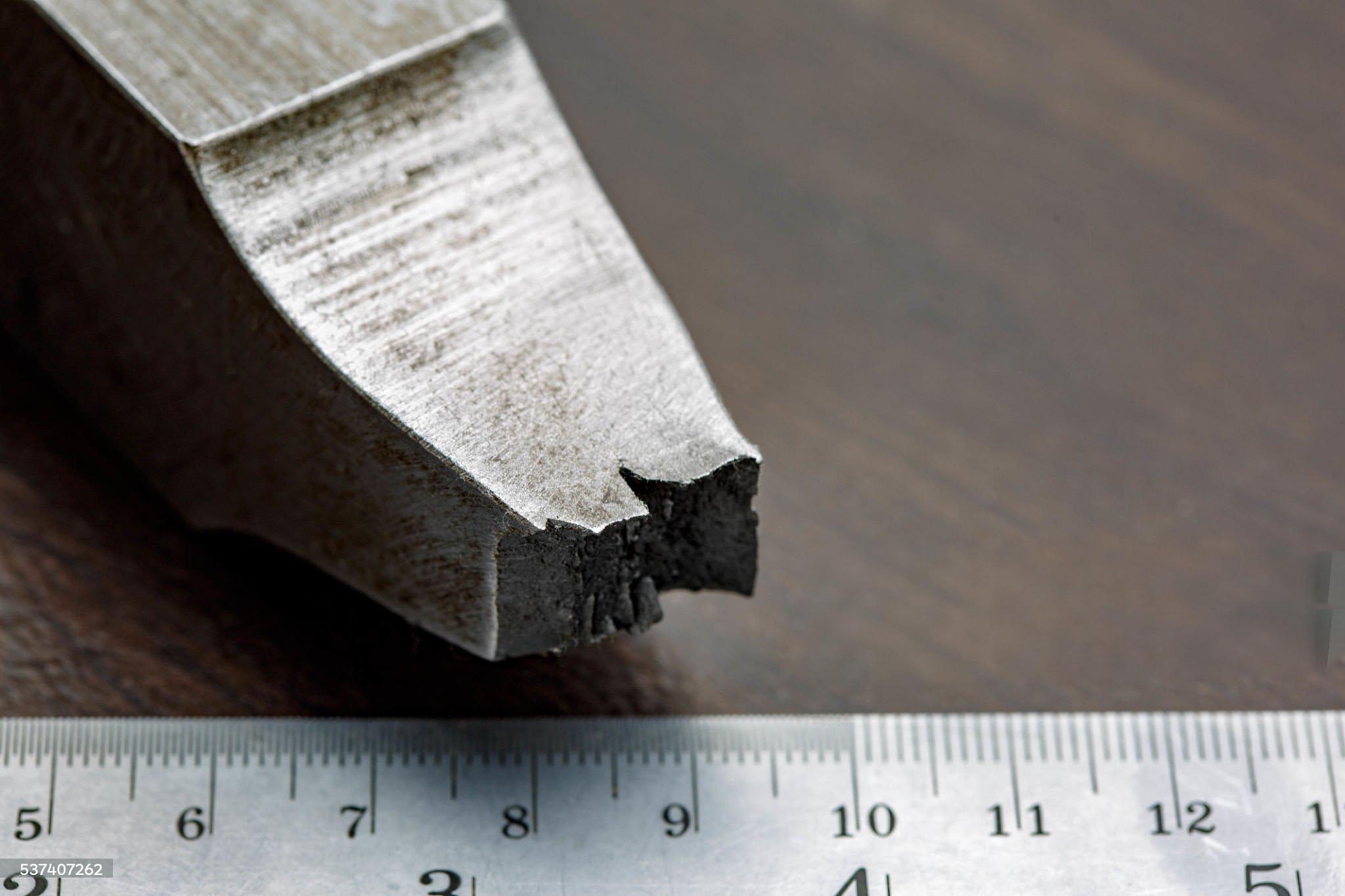
- Narrow thermal processing window: Most aluminum alloys have a forging temperature range of only 50–150°C. Exceeding this range risks incipient melting, grain coarsening, or surface oxidation, while suboptimal temperatures lead to inadequate fill and cracking.
- Strain rate sensitivity: The flow stress of aluminum increases markedly with strain rate. High deformation speeds can induce adiabatic heating and strain localization, promoting shear band formation or fracture.
- High thermal conductivity: Rapid heat dissipation into cooler dies necessitates precise thermal management to maintain uniform deformation.
- Adhesion and friction: Aluminum’s affinity for tool steel requires advanced lubrication strategies, typically graphite-based or glass-based lubricants, to prevent galling and ensure smooth metal flow.
Understanding the metallurgical characteristics of aluminum alloys—particularly their narrow thermal processing window and strain rate sensitivity—reveals why forging these materials demands such precision. But how do manufacturers translate this knowledge into actionable process control? In Part 2, we will dive deep into the critical process parameters: forging temperature, strain rate, reduction ratio, die design, and post-forge thermal treatment. Discover how each parameter influences microstructural evolution and mechanical performance—and how getting them right makes all the difference. Stay tuned!